
What we do · 02
Menstrual hygiene
When a girl cannot manage her period privately and hygienically, school stops being an option.
Area of work 02
Menstrual hygiene and women's empowerment
Our menstrual health and women's empowerment work around the world is led from KwaZulu-Natal in South Africa, with girl-led sanitation clubs in Nepal and Bhutan as well. It starts from a simple observation: when a girl cannot manage her period privately and hygienically, school stops being an option.
The programmes on this page are delivered with Sulabh International and with local partners named in each case.
- Led from
- KwaZulu-Natal, South Africa
- Also running in
- Nepal and Bhutan
- Programme
- Menstrual Match — reusable products lasting up to four years
- Designed for
- Four schools a year, around 500 girls
The work
Products, toilets and girls who lead
Why it matters
In rural South Africa, girls without the right resources can miss up to five days of school a month. They fall behind, and some leave school altogether. The problem is not only products. It is also a private toilet, clean water and a place to dispose of used pads, which many schools lack.
Menstrual Match
Our South African team answers with Menstrual Match. Rather than handing out disposable pads that run out and end up polluting rivers, the programme provides reusable sanitary products designed to last up to four years. Each girl also receives a booklet and lessons on reproductive health and on caring for the products. The programme is designed to support four schools a year, reaching around 500 girls.
Local manufacturing
In August 2026 we announced a partnership with the Sivananda World Peace Foundation to prepare for local manufacturing of sanitary pads for rural communities in KwaZulu-Natal. The unit is meant to serve the most underserved areas first and to create skills and jobs for local people. Distribution and education will be organised with local leaders, schools and community health workers.
Girls who lead
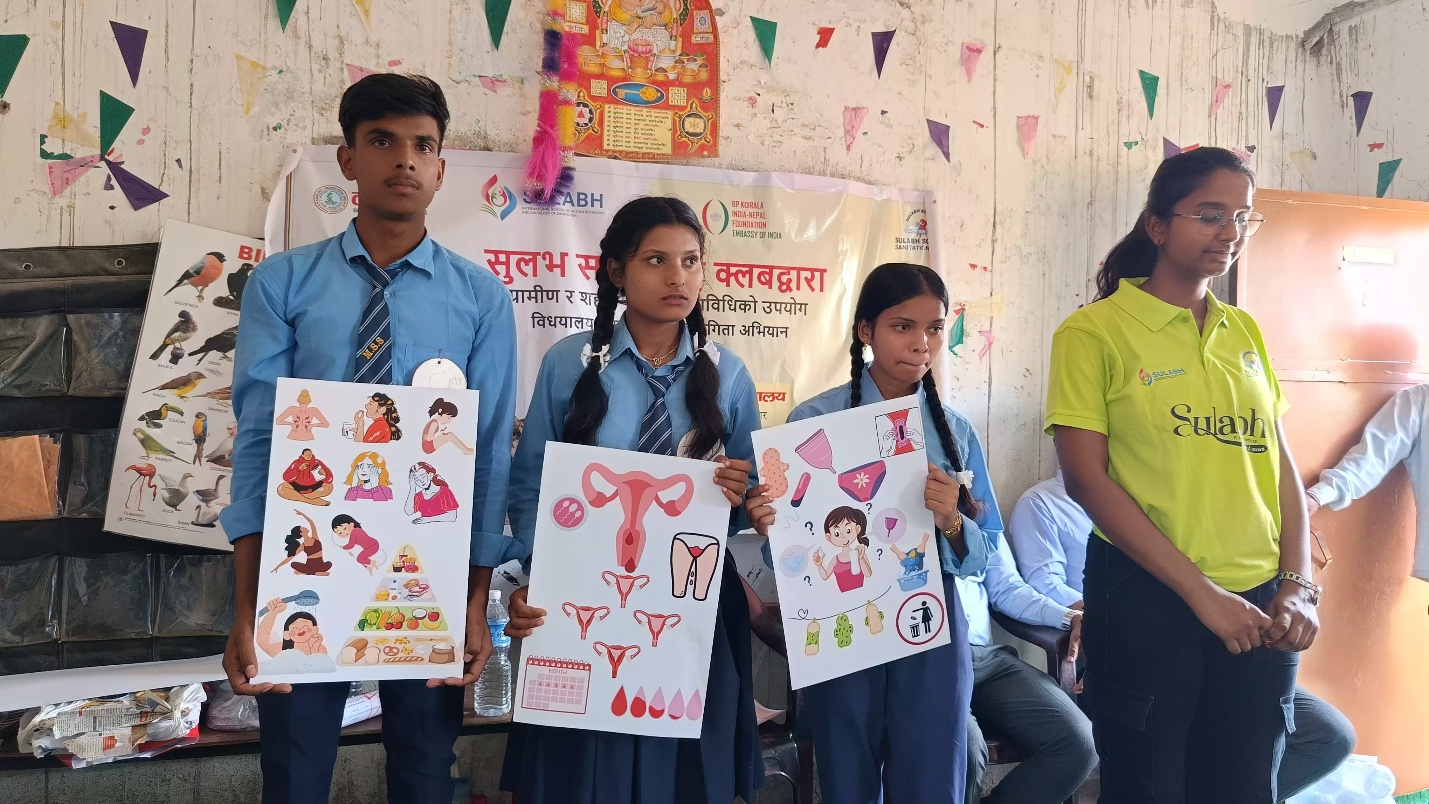
Inside schools, we rely on girls themselves. The Sulabh Sanitation Club is a girl-led movement in which young people promote hygiene and menstrual health among their classmates. Clubs run in Nepal and Bhutan and in South Africa, where a school committee piloted ownership of its toilets and sanitation under the name Club I'm Possible.
Safe toilets, reusable products, local production and girls who lead: each supports the others.
Girls without the right resources can miss up to five days of school a month.
The answer is not only products. It is a private toilet, clean water, and a place to dispose of used pads.
Next: health and hygiene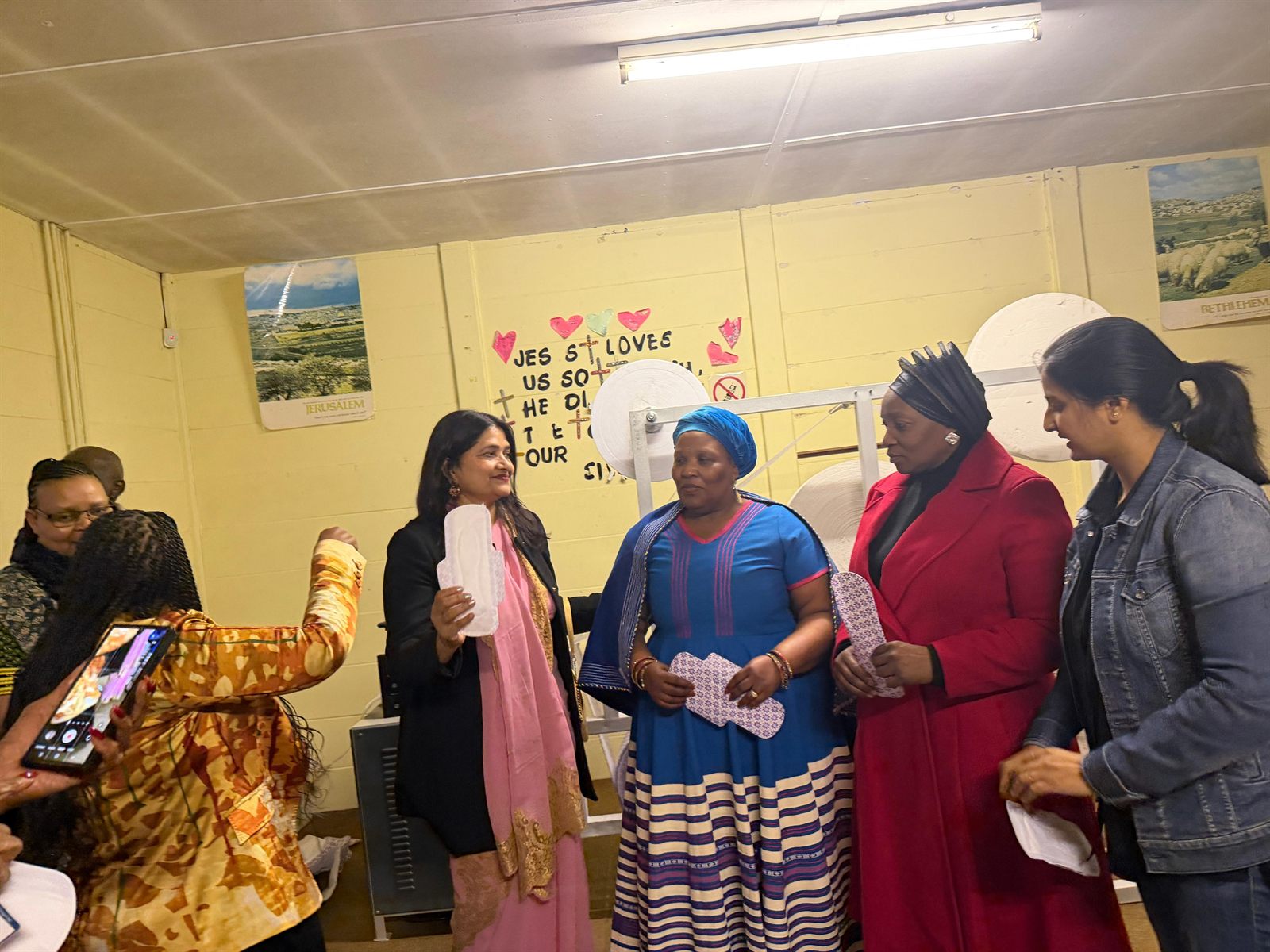
Gallery
Clubs and campaigns
-
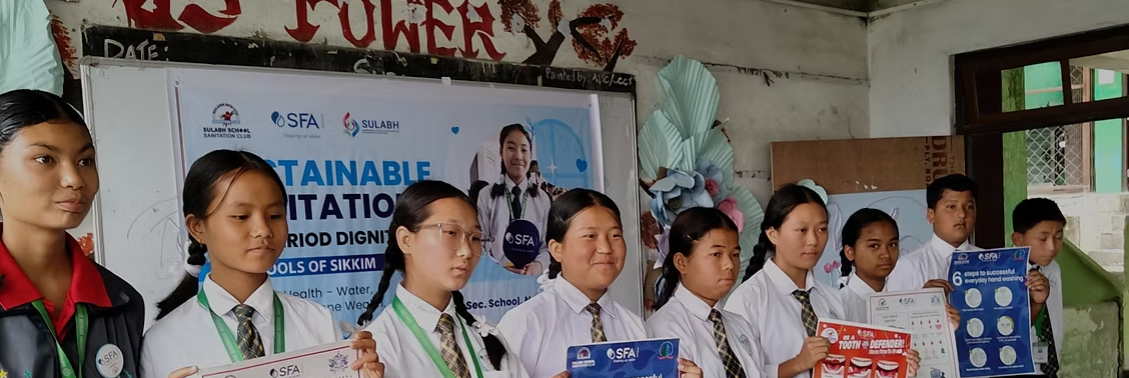
A sanitation club session in a school in Sikkim, India -
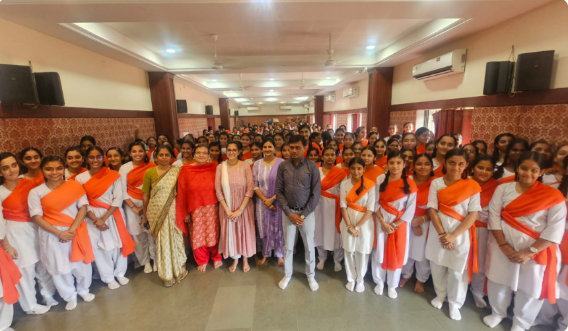
A school-wide session gathers for a group photograph

Call to action
Meaningful change begins with partnership.
We invite our visitors to learn about our work, join our mission, and contribute in any way they can. Together, we can build resilient communities and transform lives.