
What we do · 01
Clean water and sanitation
Sanitation in places a sewer line will never reach — Afghanistan, South Africa, Ghana and Nepal.
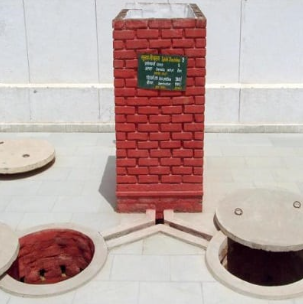
Area of work 01
Clean water and sanitation projects (WASH)
We have worked on sanitation in Afghanistan, South Africa, Ghana and Nepal, in places a sewer line will never reach. In Kabul we built five public toilet and bath complexes. In KwaZulu-Natal, South Africa we have built and renovated toilets at schools and a crèche. In Kathmandu, local partners have used our technology to build toilets around the Pashupatinath temple area.
This work is delivered in partnership with Sulabh International, whose sanitation technology and field teams sit behind the projects described on this page.
- Countries
- Afghanistan, South Africa, Ghana, Nepal
- Technology
- Low-cost two-pit pour-flush, kept free of patents
- Partner
- Sulabh International
- Settings
- Public complexes, schools, a crèche, temple districts
The work
One model, four countries
The model
Our low-cost two-pit pour-flush design treats waste safely on site, uses very little water and can be built by local people. We keep the technology free of patents so that anyone can use it. The idea travels well because the gap is the same everywhere we go: dry-vault toilets in Kabul, schools without running water in rural KwaZulu-Natal, crowded temple districts in Kathmandu. None of them has a sewer to connect to.
Afghanistan
In Kabul, between 2005 and 2007, five complexes were built with Kabul Municipality and with financial support from the Government of India. Each has separate sections for men and women and bath cubicles, and the municipality runs them on a pay-per-use basis. Waste goes into biogas digesters. The gas lights lamps, fuels a cooking stove and runs a generator, and the treated water is used for irrigation. We report that the plants kept working through the winter of 2007, when Kabul fell to around minus 30 degrees Celsius. A UN-Habitat official in Afghanistan called the two-pit pour-flush system an appropriate and affordable answer to the country's dry-vault toilets.
South Africa
In South Africa, our team at SISASSS-SA has taken the same thinking into schools and rural communities, using twin-composter toilets where there is no sewer, no running water and often no electricity. Between 2014 and 2017 they renovated school toilets with a donor, and they built a new composting complex at Cliffdale Primary School for 343 learners and 12 teachers, backed by two 10,000-litre water tanks. In October 2019, on the 150th anniversary of Mahatma Gandhi's birth, two toilet blocks at the Phoenix Settlement in Durban were upgraded with the same system. At Inkanyiso Crèche in Esibhonjeni, about 22 children had no toilet at all, which also kept the crèche from registering for government support. The ground was extremely rocky, so the team crushed the soil and levelled the site until the composters could work. The facility was completed in February 2020. Wherever we install composters, we teach local builders how to build more.
Nepal
In Nepal, an agreement was signed in 2014 with Zonta Club Kathmandu, a women's service organisation, to bring Sulabh public toilets to the Pashupatinath area. In 2017 the club handed five toilets built with this technology to the Pashupati Area Development Trust: two for men, two for women and one accessible for people with disabilities. Zonta has also handed over community toilets to the women of Goldhunga, a neighbourhood affected by the earthquake.
Recognition
The work has been recognised by the UN Centre for Human Settlements as a global urban best practice, and Sulabh's founder received the Stockholm Water Prize in 2009. What matters more to us is whether the toilets are still clean and in use years later.
None of these places has a sewer to connect to. That is the whole point of the design.
We keep the technology free of patents, so that anyone can use it.
A design that treats waste on site, uses very little water and can be built by local people travels further than any single project.
Next: menstrual hygiene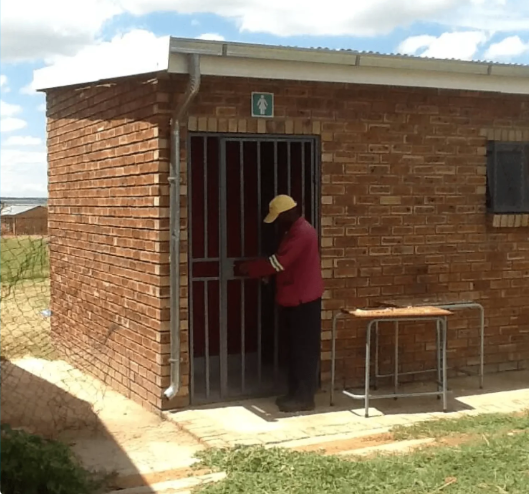
Gallery
The work on site
-
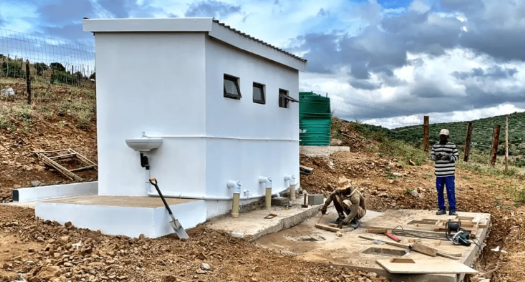
A block being finished, with its water tank behind -
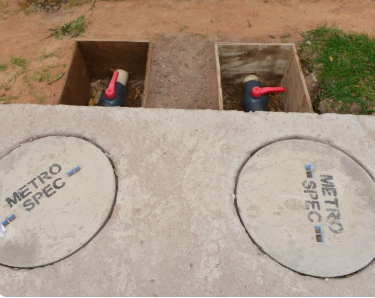
The twin composter chambers, open during installation -
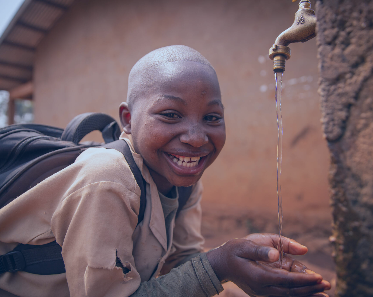
Water at the point where habits are formed -
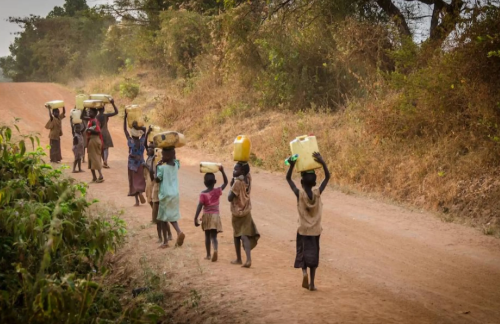
The distance water travels without a connection

Call to action
Meaningful change begins with partnership.
We invite our visitors to learn about our work, join our mission, and contribute in any way they can. Together, we can build resilient communities and transform lives.